Rain joins Western Union’s Digital Asset Network, bringing real-world payment utility to stablecoins
The service will connect stablecoins stored within Rain-powered wallets to local cash payouts via Western Union’s global retail footprint
Rain, the enterprise-grade infrastructure for stablecoin-powered payments, today announced plans to participate in the new Western Union Digital Asset Network to bring everyday cash access to customers. This integration allows users to convert stablecoins held in Rain-powered wallets into local cash payouts at participating Western Union locations, unlocking real-world spending power.
Western Union recently announced the Digital Asset Network, which connects onchain assets with traditional money movement. To deliver full customer value, stablecoins must also be usable in everyday contexts, which is Rain’s unique area of expertise.
Rain’s ability to provide stablecoin wallets for their global customers makes them perfect for the Digital Asset Network. They will be able to offer users access to cash in many global markets through Western Union,” said Malcolm Clarke, Vice President of Global Ecosystem at Western Union. “With Rain, we’re partnering to deliver comprehensive solutions that connect traditional finance and the digital asset economy.”
Western Union operates one of the world’s leading cross-border, cross-currency money-movement and payments networks, reaching more than 150 countries and territories and operating in approximately 130 currencies. Pairing that distribution and trust with Rain’s modern payments infrastructure connects digital balances to familiar access points so customers can compliantly convert to cash from any Rain-enabled wallet.
All money is moving onchain, and Western Union’s stablecoin strategy underscores that shift. Rain is designed to make those dollars usable in the real world, which our integration with the Digital Asset Network will achieve,” said Farooq Malik, Chief Executive Officer of Rain. “Western Union is an impressive global institution, and their scale and ambition are moving the entire industry forward.”
Pairing Western Union’s global reach and retail footprint with Rain’s enterprise-grade infrastructure links onchain value to local retail locations customers already use. Details on supported geographies, eligibility, and launch timing will be announced as the program approaches availability.
About Rain: Rain is the global stablecoin infrastructure platform for enterprises, neobanks, platforms, and developers. Our technology allows partners to move, store, and use stablecoins instantly and compliantly through global payment cards, on/off-ramps, wallets, and cross-border rails. As a Visa Principal Member, Rain issues cards that work anywhere Visa is accepted, powering millions of purchases in over 150 countries. Built natively for stablecoins and trusted by more than 150 organizations worldwide, Rain delivers secure, scalable infrastructure that makes money move freely and instantly around the world.
Read original press release here: https://www.prnewswire.com/news-releases/rain-joins-western-unions-digital-asset-network-bringing-real-world-payment-utility-to-stablecoins-302603406.html?tc=eml_cleartime

NAKA brings the Rain to Latin America
NAKA is expanding its card program into Latin America, powered by Rain’s issuing muscle and network reach. After first launching a self-custodial, EMV-compatible card in 2023, NAKA is now diving into one of the most active digital payments markets in the world, where mobile-first habits, dollar-linked balances, and mainstream crypto adoption are already part of everyday life. Say hello to the new NAKA+ Visa Platinum Card, a self-custodial, virtual card accepted at over 150 million merchants globally.
Why this launch works
For platforms, wallets, and fintechs, the value is clear: NAKA provides the operating layer, Rain issues the cards, and your brand stays front and center. The result? A card product that’s ready to go global without added complexity.
Rain’s infrastructure handles everything from network integration to transaction clearing, KYC, and compliance workflows. That means no vendor sprawl, no regulatory guesswork, and no delayed launches. With a model built for stablecoins and an API that connects seamlessly, most partners go from integration to live program in weeks, not months.
Users can spend online or in store just like they do today, while keeping balances self-custodied and under their name. It’s a card experience that feels familiar to users and gives businesses a real way to scale.
Why Latin America
The region is one of the most dynamic environments for digital finance. People already save, spend, and send value via apps. Mobile usage is high, dollar-based savings are common, and traditional bank access remains uneven. That makes this the perfect place for practical solutions that turn digital value into real-world spending.
With NAKA’s model and Rain as the issuer, partners can launch branded cards inside their apps and let users spend funds at millions of Visa-accepting merchants around the world. It’s a faster, more flexible route to liquidity—without relying on legacy rails, cross-border headaches, or multiple intermediaries.
From Lugano to LATAM
NAKA announced its LATAM expansion at the Plan ₿ conference in Lugano. Now it’s go time. With Rain as the issuing engine and Visa acceptance built in, partners can launch with confidence and get cards into customers’ hands fast.
You can learn more about the new NAKA+ Visa Platinum Card here.

Moving from electronic to onchain money: Farooq Malik on the Fintech One-On-One podcast
Rain’s CEO and co-founder, Farooq Malik, joined Peter Renton on the Fintech One-on-One podcast to discuss how onchain money is redefining global payments and what it means for the future of financial infrastructure.
You can listen to the full episode here.
Farooq’s conversation unpacked how Rain is helping fintechs and enterprises move from electronic to onchain money — unlocking faster settlement, lower working capital needs, and truly global reach. Below are the top takeaways from the discussion:
1. It’s not crypto vs. fintech
The future of finance isn’t about some sort of crypto vs. fintech fight for dominance — onchain money is the next evolution of financial technology. Just as paper money gave way to electronic payments, onchain money marks the next era: the programmable age of finance. Stablecoins, tokenized deposits, and CBDCs all represent money that can move, reconcile, and settle instantly around the clock.
2. Rain is building the infrastructure for onchain money
Rain provides the infrastructure that lets fintechs and enterprises move and settle value onchain, without adding complexity. With one API, partners can issue cards, manage payroll, and process payments in multiple markets — all powered by stablecoin settlement rails.
3. Continuous settlement with Visa
Rain became the first company to settle Visa transactions using stablecoins seven days a week, including on weekends and holidays. This breakthrough reduces working capital requirements and makes near-instant liquidity a reality for fintechs and their customers.
4. One API for global scale
Fintechs no longer need to rebuild or relicense for every market. Rain’s infrastructure abstracts away local processing and compliance layers, enabling companies to go global faster with the same performance and reliability everywhere.
5. The next chapter of financial infrastructure
Farooq emphasizes that onchain money isn’t a replacement for fintech — it’s its next evolution. By upgrading the backend while preserving familiar user experiences, Rain is helping the world transition from digital to programmable money, seamlessly.
Farooq closed with a reminder that technology should make finance simpler, faster, and more open. Onchain infrastructure is how that vision becomes real.

Rain’s CEO is betting the stablecoin story may be one consumers never notice
The story of digital assets has typically been told loudly. Bitcoin arrived with libertarian bravado, promising to replace banks and undermine governments. Ethereum pitched itself as a world computer.
At every turn, crypto has been most comfortable when it could be seen.
Yet the most transformative chapter in digital payments may prove to be the quietest one: stablecoins.
Stablecoins are often framed as a new front-end payment method, but Farooq Malik, CEO and Co-Founder of Rain, noted during a conversation hosted by PYMNTS CEO Karen Webster that their core unlock is actually around merging money movement and reconciliation into a single digital packet.
It’s “the holy grail of money since the beginning of time,” Malik explained, not because settlement is hard, but because cleanly reconciling what moved, why, and for whom is the costly part.
“Transacting is simple sometimes,” he stressed, but ensuring it “flows into your financial statements,” is “audit ready,” and “GAAP compliant” is “enormously complicated.”
This is why the current wave of stablecoin innovation is less about launching consumer-facing apps and more about embedding stablecoins into existing networks.
Payment service providers can maintain the merchant experience while cutting costs in their own operations. Banks can use tokenized dollars to balance intraday liquidity. Multinationals can reduce friction in intercompany transfers.
It’s a bet that Rain recently raised a $58 million Series B to help build.
‘Same, but better’ strategy
Rather than pursue shiny new front-end experiences, Rain started by wiring stablecoin balances into what people already do: pay with cards. That decision meant wrestling with authorizations, settlements, reconciliation and chargebacks, all features that consumers take for granted and merchants rely upon.
“We realized in order for us to be in any credible number of conversations after the regulatory clarity came in, we would’ve needed to have started before any of this was becoming institutionally palpable,” explained Malik.
“We started with cards for two reasons. One was because you can pay for most things with a payment card. And the second thing was because card payments are enormously complex, and we wanted to correct the code on authorizing payments and settling payments for this enormously complex way of transacting.”
This approach also positioned Rain to serve both crypto-native companies and conventional programs like health spending accounts (HSAs/FSAs), commuter benefits, and wage access; tackling each by looking to reduce float and operate with 24/7 money.
Webster pressed on the consumer angle. Will stablecoins in commerce look like the halting transition to account-to-account payments, where shoppers resist losing card-like protections?
“That assumes a world where consumers are opting into stablecoins on their own,” Malik replied, noting that some will, and merchants like Stripe or Coinbase are building “natively accepted” stablecoin pathways. But Rain’s own thesis is to offer both paths without a forced choice: Let those who want a stablecoin-native experience have it, while upgrading the rest invisibly.
“Card networks by and large have actually figured out this … risk shift framework … chargeback modality … [and] adjudicate disputes,” Malik said. “All of our underlying account infrastructure and authorization infrastructure also allows for chargebacks, allows for refunds … covered by the same protections that you would get from any other payment card.
“The easiest way to upgrade or increase adoption is by making it look and feel the same,” he added. “Customer experience shouldn’t have to change.”
Stablecoins and tokenized deposits
What’s changed lately is the institutional readiness to use those improvements that stablecoins offer in real-world production, not just in sandboxes. But at the same time, and enthusiasm notwithstanding, unanswered policy and accounting questions remain.
Webster asked what executives worry about in one-on-one settings, and Malik was candid: “A lot of it is still as yet undefined. … A lot of the market rules are still as yet undefined … how that impacts accounting practices.”
The technical unknowns are just as real. Which chains win? Which token models dominate? Where do tokenized bank deposits fit relative to third-party stablecoins?
Malik expects that one year from now, we’ll be “talking a lot about how stablecoins and tokenized bank deposits interplay with each other,” and especially “how do we create interoperability between various closed loop systems … and the various open loop systems that already exist.”
This article originally appeared in PYMNTS.

Rain and Lithic forge strategic partnership to accelerate global growth of stablecoin-powered payments
Collaboration makes it faster and easier for fintechs, platforms, and enterprises to launch customizable, stablecoin-powered card programs at scale
Rain, the enterprise-grade infrastructure for stablecoin-powered payments, today announced a strategic partnership with Lithic designed to accelerate both companies’ growth, expand global distribution, and give partners more technology choices as they build and launch scaled card programs.
Rain has become the most experienced and scaled provider of stablecoin-powered card infrastructure—with more than 150 partners and millions of transactions processed in over 150 countries. Through this partnership with Lithic, Rain will dramatically expand its reach, making its ground-breaking stablecoin technology available to even more fintechs, platforms, and enterprises worldwide. By pairing Rain’s stablecoin-native card issuance and payments platform with Lithic’s expertise and issuing processing capabilities, the two companies will make it faster and easier for businesses to launch, integrate, and scale global card programs.
The partnership also gives Rain’s partners more choice in how they power their card programs through the integration of Lithic’s modern, developer-friendly processing platform known for its speed, scalability, and global resilience. With Lithic’s global issuer processor certification, the partnership enables the processing of stablecoin-powered transactions across the 150+ countries where Rain-issued cards are accepted. This ensures Rain partners have a best-in-class option for powering programs at scale, with advanced fraud prevention and real-time authorization capabilities.
This partnership marks an important step forward for Rain. By combining our stablecoin infrastructure with Lithic’s reach and processing technology, we’re making it easier than ever for partners to launch, scale, and shape programs that fit their needs,” said Farooq Malik, CEO & Co-founder of Rain. “Together, we’re shaping the next chapter of programmable payments.”
Stablecoin-powered cards are a major growth frontier in payments, and Rain is at the forefront of making them work at scale,” said Bo Jiang, CEO & Co-founder of Lithic. “This partnership allows Lithic to bring our advanced processing platform into this fast-growing category and to support fintechs and card programs around the world. It’s an exciting opportunity to help our shared partners innovate faster.”
This collaboration highlights Rain’s mission to deliver the most flexible, powerful, and globally available infrastructure for stablecoin-powered payments — helping customers launch faster, scale globally, and unlock new revenue streams.
About Rain: Rain is the global stablecoin infrastructure platform for enterprises, neobanks, platforms, and developers. Our technology allows partners to move, store, and use stablecoins instantly and compliantly through global payment cards, on/off-ramps, wallets, and cross-border rails. As a Visa Principal Member, Rain issues cards that work anywhere Visa is accepted, powering millions of purchases in over 150 countries. Built natively for stablecoins and trusted by more than 100 organizations worldwide, Rain delivers secure, scalable infrastructure that makes money move freely and instantly around the world.
About Lithic: Lithic is the leading card issuing technology company built for high growth technology companies. Lithic's APIs and operational enablement services enable businesses to move money, build card programs, and issue debit, credit, and prepaid cards to consumers and businesses with unparalleled ease and flexibility. With a focus on empowering businesses to scale globally, Lithic is committed to providing innovative solutions that meet the evolving needs of the financial services industry. For more information, visit www.lithic.com.
Read original press release here: https://www.prnewswire.com/news-releases/rain-and-lithic-forge-strategic-partnership-to-accelerate-global-growth-of-stablecoin-powered-payments-302559998.html?tc=eml_cleartime

What it looks like to launch a card program with Rain
Launching a card program used to be a multi-quarter project: multiple intermediaries, bespoke bank relationships, and a long list of vendors to coordinate.
Rain was built to remove those layers. As a Visa Principal Member, we issue directly on the Visa network, which means fewer decision-makers, fewer handoffs, and go-to-market timelines measured in weeks, not years. Our partners typically launch in around six weeks, and Rain-powered Visa cards are accepted at over 150 million merchants, so your users can spend virtually anywhere Visa works.
A single integration with Rain can unlock multiple markets over time. The issuance platform is robust enough to support scaled, global programs, but flexible enough to let you design the program you want: consumer or commercial, Rain-managed or partner-managed flow of funds, with on-ramps, wallets, and off-ramps tailored to your specific use case.
Below is what the journey typically looks like from “we’re interested” to “cards are live.”
Step 1: Scope your program
The first question to answer is how do you want to design your custom program?
- Who are you issuing to? Rain can issue both consumer cards (B2C) and corporate cards (B2B).
- How do you want funds to move? You’ll choose between two core models:
- Option A: Rain-Managed flow of funds. In a Rain-Managed setup, we handle the smart contract and daily settlements with your users. A dedicated smart contract is created when a user opens a card, and they fund and manage it from their own wallet. Rain maintains the ongoing ledger and manages settlement with cardholders, while also handling liquidation to settle with Visa. This keeps your operational footprint light while still giving your users a seamless experience. This model is ideal if you want to move fast, reduce complexity, and avoid building a full ledger and settlement stack on day one.
- Option B: Partner-Managed flow of funds. In a Partner-Managed setup, you keep full ownership and customization of how funds are managed. You maintain the reserve balance, decide whether to approve or decline each transaction via webhook, and build and maintain your own transaction ledger. You also settle directly with your customers, on your own terms, while Rain powers the Visa connectivity and handles liquidation to settle with Visa. This model is a fit if you want maximum control over treasury, collateral types, and customer settlement logic.
- What parts of the Rain stack do you need? We offer multiple capabilities to power the most effective and flexible card programs, including:
- On-ramps to convert fiat into stablecoins
- Wallets to secure onchain assets and power card spend
- Off-ramps to move back into local currencies
By the end of scoping, we’ll have a clear outline of your ideal program design and flow of funds.
Step 2: Choose the right commercial model
Next, we walk through economics. Rain offers three pricing tiers. Across tiers, the balance shifts between:
- Share of interchange revenue you retain
- Program and platform fees
- Contract duration and commitments
Higher tiers typically come with a larger share of interchange in exchange for higher minimums or longer commitments; lower tiers keep fixed fees lighter for earlier-stage or experimental programs.
We’ll map each option to your expected volume and growth plans so you can choose a model that works in the near term and scales over time.
Step 3: Get access to the API docs
Once we’ve aligned on design and commercials, and a mutual NDA is in place, we give your team access to our API documentation. It covers card issuance, flow of funds, balances, controls, webhooks, and more.
On request, we’ll also provision a sandbox environment where your engineers can test end-to-end flows without touching real funds.
Step 4: Sign the agreement
With program design, pricing, and initial technical validation in place, we move to contracting.
The agreement formalizes:
- Your program scope (e.g., Rain-Managed vs Partner-Managed, card types, supported geos)
- Commercial terms (tier, fees, revenue share)
- Roles and responsibilities around compliance, risk, and support
Once the contract is executed, we officially kick off implementation.
Step 5: Start on implementation
After signing, we set up your implementation experience based on your selected tier.
If your tier includes a dedicated implementation lead, you’ll be introduced to them right away. They will:
- Set up a shared communications channel (most commonly Slack)
- Give you access to our project management tool so you can see timelines, owners, and milestones
- Coordinate across compliance, engineering, and operations on both sides
If your tier does not include a dedicated implementation lead, you’ll still get access to the same organized project management workspace, including timelines, owners, milestones, and implementation checklists so your team can self-guide the rollout, with Rain available for support as needed.
From here, you move through a structured onboarding process that runs in parallel across compliance, development, and production readiness.
Step 6: Implementation & onboarding
Onboarding is organized into three core tracks—Compliance, Development, and Production access.
Compliance: getting your program approved
First, we collect the information needed to review your program from a regulatory and risk perspective. The documents we request are standard for any corporate due diligence process. For example: company formation documents, information on the source of funds, and identification details for ultimate beneficial owners (UBOs).
Once everything is received and reviewed, we issue compliance approval, clearing your program to move into production testing.
Development: integration and testing
In parallel, your engineering team integrates with Rain and validates the full card lifecycle. Core steps include:
- Review API docs: Your developers get familiar with endpoints, authentication, and webhook patterns.
- Request sandbox access: We provision sandbox credentials and environments for your team.
- Test the application flow: You build and test how users sign up, pass checks, and receive cards in your app.
- Test card creation: Your system calls our APIs to create virtual and/or physical cards, confirming that data and controls are correctly set.
- Show encrypted card details: You implement display of secure card details as needed for your use case.
- Test transaction webhooks: You’ll test webhook handling for transactions, card creation, and other events to ensure you’ve tested every user scenario for your program.
- (For Partner-Managed Programs) Build your own ledger & authorization flow: For Partner-Managed programs, you will design, develop, and rigorously test your own ledger and authorization flow. Our API Docs contain detailed information about ledger best practices to help guide your team.
- Submit a demo flow for approval: You’ll submit a recorded demo of the end-to-end user flow from your sandbox environment to Rain. We will closely review each step of the process and provide feedback and approval.
During this phase, you’ll also kick off card design. We’ll provide templates for both virtual and physical cards, ensuring your designs meet Visa’s requirements. Because of card manufacturing lead times, fully custom physical cards can take up to four months from design to delivery, but we also offer faster-to-market template options if you need to move quickly.
By the end of this phase, you’ve proven that your integration works from sign-up to spend, and your card designs have entered production.
Production access: controlled ramp-up
With compliance approved and development testing complete, we grant production access and run a controlled rollout. On the production testing and UX side, you will:
- Review and finalize Rain-templated user agreements
- Provide a production-ready demo flow for Rain’s review and approval
- Conduct limited production testing with real users under controlled conditions
In parallel, your marketing team will submit all launch materials—such as landing pages, social campaigns, FAQs, and help center content—to Rain for review, feedback, and approval. This review is required to ensure your marketing assets align with Visa and Rain guidelines before going live.
Ready for go-live and scale
Once production testing meets success criteria, final card terms are in place and approved, marketing materials are ready-to-go, and both teams are confident in system behavior, we mark the program ready for launch.
At this point:
- You can publish marketing materials
- You can expand access from pilot cohorts to your broader user base
- We continue to monitor performance, risk, and card network behavior closely
From there, you receive ongoing support from the Rain team covering technical questions, new feature launches, compliance updates, and expansion into new markets over time.
Bringing it all together
Standing up a credit card program used to be a one-off, multi-year effort. With Rain, it’s a repeatable process:
- Scope the program and choose your flow of funds
- Select the commercial model that matches your economics
- Sign the agreement
- Move through a structured onboarding process covering compliance, development, production access, and marketing material development
The result is a fully branded, globally accepted card program built on stablecoin-powered rails, running on infrastructure that’s already proven at scale.

What’s next for stablecoins: Farooq Malik on Talking Tokens
Rain's CEO and co-founder, Farooq Malik, sat down with Jacquelyn from Talking Tokens during the Wyoming Blockchain Symposium in Jackson Hole to unpack all things stablecoins, tokenized money, and Rain’s role in building the future of payments.
You can listen to the full episode here.
Farooq’s conversation offered a clear view into how stablecoins are evolving from niche assets into mainstream financial infrastructure. Below are the top takeaways from the discussion:
1. Stablecoins need real utility
Issuing a stablecoin is only step one—the true test is whether people can actually use it. Billions of dollars sit in stablecoins today, but Rain is focused on turning them into money you can use anywhere Visa is accepted.
2. Tokenized money is inevitable
Stablecoins, CBDCs, and tokenized deposits all point toward the same reality: tokenized money. By combining payment and reconciliation into a single process, tokenization solves inefficiencies that have long plagued traditional banking and payments.
3. Building rails that feel familiar
Rain’s approach isn’t about changing consumer behavior—it’s about upgrading the backend. Just like mobile phones and streaming services reshaped industries without altering user habits overnight, Rain makes stablecoins “just another currency."
4. Institutions are catching on
Rain has spent years preparing for regulatory clarity—and now that it’s here, interest is surging. From global banks to state governments like Wyoming with its new Frontier Stable Token, institutions are exploring how tokenized money can improve efficiency and broaden access.
5. A global, open future
Farooq emphasized that openness will define the future of payments. Rain’s APIs and infrastructure allow banks, fintechs, and enterprises to integrate stablecoins or tokenized deposits seamlessly, scaling across borders with a single partner.
Farooq closed with a simple reminder: “Always believe the world could be better.” Stablecoins and tokenized money aren’t just about efficiency—they’re about building a financial system that works faster, costs less, and includes more people.

Why we raised: building the global stablecoin enablement platform
Today, we announced that Rain has raised $58 million in Series B funding, led by Sapphire Ventures and with participation from Dragonfly, Galaxy Ventures, Endeavor Catalyst, Samsung Next, Lightspeed, and Norwest. This investment will help us accelerate our progress toward becoming the global stablecoin enablement platform for enterprises, marketplaces, neobanks, and developers.
A pivotal moment for stablecoins
Over the past 18 months, stablecoins have moved from the periphery of finance to the center of global payment flows. In 2024 alone, they processed $27.6 trillion in transactions — more than Visa and Mastercard combined — and the number of active stablecoin wallets grew by over 50% year-over-year, now surpassing 30 million worldwide.
We are still early in the adoption curve. In many ways, stablecoins today are where mobile phones were in the late 1980s: powerful, but bulky and limited to a select few. Back then, mobile phones were reserved for executives and installed in cars; today, they’re in everyone’s pocket, transforming nearly every industry. Stablecoins are on a similar path as they move from niche usage to universal utility at a pace that will feel inevitable in hindsight.
Those of you who have been following our journey know we announced our Series A in March of this year. That raise was about expanding the global footprint of our card issuance solution, and boy did we deliver:
- Since January 2025, card transactions are up 10x, with partners seeing sustained double-digit monthly growth.
- A single Rain integration now unlocks access to a serviceable market of over 1.5 billion people worldwide.
- End users are transacting in over 150 countries — from purchases at local merchants to online marketplace payouts.
Our infrastructure is being used by companies like Nuvei, which pays merchants seven days a week in stablecoins through Rain-powered accounts, and Nomad, whose customers in Brazil can save, store, and spend in dollars seamlessly for anything from coffee to Starlink.
Why we raised
If our Series A was about scaling our card platform, this raise is about expanding the full stack of services enterprises need to launch and scale stablecoin-based products:
- Money-In: Integrated on-ramps and virtual accounts to support more fiat-backed programs globally.
- Wallets & Accounts: Embedded wallets that allow any app or platform to compliantly hold stablecoins.
- Money-Out: Real-time cross-border payout rails, advanced treasury controls, and multi-currency off-ramps.
Our goal is to be the one-stop shop for stablecoin adoption, so partners can focus on their customers and leave the complexity of global payments infrastructure to us.
At the same time, we’re doubling down on supporting the customers who are already winning with Rain. Their programs are growing at an extraordinary pace, and this raise ensures we can scale our infrastructure, services, and collaboration alongside them. That means even faster onboarding, better end-to-end customer experiences, and deeper co-development to help our partners grow their programs and reach new markets even faster.
We’re pleased to have chosen Sapphire to back this enterprise-worthy ambition. Their belief in the future of programmable, globally accessible money — and their experience helping companies scale into regulated, multi-jurisdictional environments — make them the right partner for our next stage.
We’re also grateful to our returning investors, including Norwest, Lightspeed, and Galaxy Ventures, for reaffirming their support.
The way money was supposed to be
The earliest form of money was beads, seeds, shells, and coins. When it was exchanged, it moved instantly from one hand to another. Over time, the whole system slowed down, introducing delays, intermediaries, and unnecessary costs.
Rain builds the technology that makes money move freely again:
- So a global marketplace can pay sellers across 50 countries in seconds, not weeks, without needing a web of bank accounts.
- So the freelance engineer in Argentina can get paid instantly, securely store their income in stablecoins, and use it to purchase their children’s back-to-school gear.
- So the auto manufacturer can pay suppliers as soon as materials arrive at port, receive raw materials days sooner, and keep their factories humming.
If you’re involved with payments at your company and these types of improvements excite you, we’d love to work with you. Reach out to connect with our team.
And if you want to help build this future, we’re hiring across every team to meet the demand from partners ready to embed stablecoins into their products. Explore careers at Rain here.

Rain raises $58M Series B led by Sapphire Ventures to become the enterprise stablecoin platform of record
Rain has experienced 10x growth in 2025 and now powers service to 1.5B+ people through a single integration
Rain, the enterprise-grade infrastructure for stablecoin-powered payments, today announced a $58 million Series B funding round led by Sapphire Ventures, with participation from Dragonfly, Galaxy Ventures, Endeavor Catalyst, Samsung Next, Lightspeed, and Norwest. The raise brings Rain’s total funding to $88.5M and comes just five months after the company’s Series A — cementing Rain’s role as the single integration global fintechs, banks, and marketplaces use to launch compliant stablecoin-powered cards, wallets, and payment programs.
Enterprise interest in stablecoins has surged following the GENIUS Act in the U.S. and the MiCA framework in Europe, which have created a clear regulatory path for adoption. Rain’s vertically integrated platform enables partners to embed stablecoins into products and operations — covering money-in, storage, spending, and money-out — all through one API. Partners can compliantly launch programs to over 1.5 billion people today, with expansion underway into Europe, the Middle East, Africa, and Asia-Pacific.
Rain has pioneered making stablecoins instantly usable anywhere Visa is accepted through its physical and virtual card programs, processing millions of transactions across 150+ countries. The company’s transaction volume has grown 10x since January 2025, with portfolio partners — including Nuvei, Avalanche, Dakota, and Nomad — using Rain’s infrastructure for merchant payouts, everyday consumer purchases, B2B spend, and cross-border payroll.
Stablecoins are shifting to the backbone of global commerce,” said Farooq Malik, CEO and Co-founder of Rain. “In its earliest form, money moved instantly. We’ve spent centuries slowing it down. Rain is bringing that simplicity back to billions of people, but now it works across any border, any platform, and any currency.”
Rain is a Visa Principal Member and uniquely settles 100% of card payment volume directly in stablecoins on the Visa network. The platform is built natively for stablecoins, not retrofitted from fiat rails, and meets enterprise compliance standards including PCI DSS, SOC 2, and audited smart contracts.
Stablecoins have scaled to hundreds of billions in circulation, but until now, they couldn’t be easily spent. Rain is working to fix that by connecting stablecoins to Visa’s global network, turning them into money you can actually use for everyday commerce. We’re proud to partner with Farooq, Charles, and the Rain team as they redefine the future of payments,” said Jai Das, President and Partner at Sapphire Ventures, as well as Rain’s newest Board Director.
The new funding will be used to expand Rain’s platform and services to give global institutions the most flexible, modular, and compliant stablecoin infrastructure available. The company is also investing in hiring across engineering, commercial, and compliance teams; helping existing partners scale programs; and entering into new markets where enterprises are embracing stablecoin-based payment workflows.
Read original press release here: https://www.prnewswire.com/news-releases/rain-raises-58m-series-b-led-by-sapphire-ventures-to-become-the-enterprise-stablecoin-platform-of-record-302540587.html?tc=eml_cleartime

Rain adds support for Dinari’s USD+, enabling yield-bearing stablecoin spending across LATAM
Offramp becomes first partner to offer USD+ accounts with integrated Rain-issued cards
Rain, the enterprise-grade infrastructure for stablecoin-powered payments, today announced native support for USD+, a yield-bearing stablecoin issued by Dinari, the leading provider of tokenized U.S. public securities. With this integration, Rain’s partners—including Offramp—can now offer customers outside of the United States the ability to hold USD+ and use it globally through Rain-issued cards.
USD+ is backed 1:1 by U.S. Treasuries and cash equivalents and currently yields approximately 5% APY. It enables users to earn while they hold, creating a radically better financial experience for those in regions where traditional dollar accounts are inaccessible or underwhelming.
Through Rain’s API, partners can now offer users digital dollar accounts that automatically earn yield, without requiring minimum balances, foreign bank accounts, or complex investment products. These balances are instantly spendable anywhere Visa is accepted—turning idle funds into an income-generating, global payment source.
Offramp, a global neobank with a focus in emerging markets such as LATAM, is the first to roll out this capability. Users of Offramp located outside of the United States can hold USD+ in their accounts, earn daily yield, and use that balance for purchases around the world with their Offramp card and invest in tokenized equities through Dinari’s dShares™.
“From the very beginning, we designed Rain’s technology to be token-agnostic, stablecoin-native, and built to evolve as the asset landscape expands. Our ability to seamlessly extend support to USD+ exemplifies the strength of our platform,” said Charles Yoo-Naut, CTO & Co-Founder at Rain. “By supporting USD+, we’re giving partners like Offramp the ability to launch products that are both financially compelling and frictionless.”
USD+ is issued and settled on the Dinari Financial Network, which also powers dShares™—Dinari’s fully-backed, compliant tokenized equities. These building blocks enable neobanks, brokers, and fintechs to offer their customers regulated access to U.S. financial products that were previously out of reach.
“Rain’s integration of USD+ proves our infrastructure powers both yield-bearing stablecoins and tokenized equities for partners,” said Gabe Otte, Co-Founder & CEO of Dinari. “Our mission is to democratize access to U.S. dollars and equities globally. With Rain, fintechs can now put those dollars directly into users’ hands, where they can grow and remain spendable.”
“We’re excited to deepen our partnership with Rain and Dinari as the first launch partner for USD+. Through Rain’s support for USD+, we’ll be able to unlock the true potential of stablecoins for users in emerging markets by combining spendability with yield generation,” said Luc Loja, CEO & Founder of Offramp. “This is a historic milestone in stablecoin innovation.”
Dinari Inc. is a Registered Transfer Agent with the United States Securities & Exchange Commission (Section 17A(c)). Dinari dShares are not currently available in the United States and certain jurisdictions as limited by law.

How Wyoming's stablecoin boosts the state's payments profile
While progress on a U.S. central bank digital currency has ground to a halt, government involvement in cryptocurrency has not disappeared entirely.
The Wyoming Stable Token Commission this week launched the Frontier Stable Token (FRNT), a state-issued, dollar-pegged stablecoin that is designed for what it calls "real-world" transactions.
The commission partnered with Ava Labs' Avalanche, a blockchain platform that supports decentralized applications and smart contracts; and Rain, a global card issuing platform designed for stablecoins.
"FRNT will make government processes more efficient," Anthony Apollo, executive director of the Wyoming Stable Token Commission, told American Banker, noting disaster recovery funding, disbursements and resource management can be improved, along with more funding for the state's schools and other initiatives.
The state's stablecoin comes as dozens of banks, fintechs and retailers consider launching a stablecoin in the wake of the Genius Act's passage. But while most of these moves are exploratory, Wyoming is an early mover in actual issuance, and its new stablecoin embeds the state deeper into not only cryptocurrency, but also the broader digital payments market.
"Wyoming launching its own dollar stablecoin is a watershed in several respects, which raises major public policy issues. It's the first public entity to launch a dollar stablecoin," Eric Grover, a principal at Intrepid Ventures, told American Banker.
What is Wyoming's stablecoin?
FRNT is backed by short-duration U.S. Treasury bills and U.S. dollars, with a 102% reserve as required by the Wyoming Stable Token Act, an enabling state law that passed in 2023, two years before the federal stablecoin-focused Genius Act. One of FRNT's partners, Rain, in May joined Visa's stablecoin settlement project, and is the issuer of FRNT's physical card, which can be used to make payments within Visa's merchant network. FRNT also supports Apple Pay and Google Pay.
Other FRNT participants include LayerZero, which supports token issuance; Fireblocks' blockchain infrastructure; Franklin Advisers to manage FRNT's reserves; Inca Digital, which will supply for open-source technology; and The Network Firm, which will perform for audits and monthly attestations, or the statement that reports a stablecoin's backing assets.
In testing, FRNT supported contractor disbursements through Hashfire, a Wyoming-based company that converts contracts into digital assets to speed payments. These payments executed in a "few seconds," according to FRNT's release, which positions FRNT as an option for government-to-business payments.
FRNT's issuers say tax refunds, social benefits and other government payments can be put "on chain," creating speed and efficiency, contending it can be a model for other states.
Wyoming's stablecoin has been deployed on the Arbitrum, Avalanche, Base, Ethereum, Optimism, Polygon, and Solana blockchains.
FRNT is available to users outside of Wyoming, and the stablecoin will have its use cases broadened in the future to potentially include remittances and other transfers, Apollo said.
The state Commission said it does not anticipate selling FRNT directly to the public but will make it available for purchase through a network of authorized resellers that the commission will vet through a "Know Your Business" review.
FRNT can generate revenue through interest earned on its reserves (held in cash and short-term U.S. Treasury bills), Morgan Krupetsky, vice president of onchain finance at Ava Labs, told American Banker in an email, adding this income can support the Wyoming School Foundation program along with other Wyoming programs.
In addition to direct interest income, Wyoming can potentially reap broader economic benefits from FRNT, including diversified revenue streams, Krupetsky said. "FRNT offers a potential source of revenue beyond the state's traditional energy and tourism sectors."
Wyoming has long been a crypto-forward state politically, passing more than three-dozen laws in recent years that give regulatory support for custody, licensing, consumer protections and charters for crypto banks.
"Wyoming's efforts in blockchain and digital asset regulation, including FRNT, are intended to attract businesses and professionals in fintech and related fields, such as artificial intelligence and energy," Krupestky said. "FRNT can encourage the development of new payment systems and DeFi applications built on its infrastructure."
FRNT puts a state's imprimatur on dollar stablecoins, Grover said.
"The state also hopes to make money on its overcollateralized stablecoin. Presumably, it'll try to spur adoption by paying vendors with FRNT," Grover said. "Providing for widespread interoperability over multiple blockchains will give it a better shot at achieving widespread use."
Is FRNT a state CBDC?
FRNT enters a rapidly growing stablecoin market. The U.S. Treasury projects the stablecion market may pass $2 trillion by 2028, up dramatically from its current level of about $260 billion.
Crypto-focused companies such as Tether and Circle have dominated that market thus far, but there's an expectation that more financial institutions and other firms will issue stablecoins in the coming years.
"Will other states issue stablecoins? And what are their goals?" Gareth Lodge, a senior analyst at Celent, told American Banker. "Many of the states argued hard against CBDCs, yet FRNT looks very like a CBDC."
Apollo said that while he understands the comparison to a CBDC, there are differences. "What we're doing is almost 'anti CBDC,'" he said, noting Wyoming does not have a central bank and is not issuing digital dollars without backing it with reserves. "We're not conjuring dollars out of the ether." There are also privacy protections for FRNB, Apollo said. Some of the criticisms of a CBDC included the fear that it could be used for surveillance. Wyoming's laws ensure protection of the private user keys on the blockchain, Apollo said.
FRNB is a public option in a crowded market. There's already a fast-expanding roster of nonbanks and banks innovating and competing in dollar stablecoins, Grover said.
"Today, while the Fed issues cash- distributed by banks, and electronic dollars for banks, most money used by consumers and businesses is issued by commercial banks," Grover said.
Wyoming's token also acts as a payment system, Grover said. "While the Fed runs several interbank payment systems competing with bank cooperative TCH, the private sector runs most of our payment systems, through Visa, Mastercard, American Express, Discover, Zelle, PayPal, Venmo, Cash App, and others."
This article originally appeared in American Banker.
Frontier Stable Token (FRNT) debuts Rain-issued card on Avalanche for everyday stablecoin spending
Frontier Stable Token (FRNT) Debuts Rain-Issued Card on Avalanche For Everyday Stablecoin Spending
Announced at SALT’s Wyoming Blockchain Symposium, FRNT is Wyoming’s production-grade, dollar-pegged digital asset built on Avalanche and now available to use via Rain’s Visa-integrated platform, signaling a new era of programmable commerce.
The Wyoming Stable Token Commission, in collaboration with Avalanche and Rain, today unveiled the mainnet launch of the Frontier Stable Token (FRNT), the first state-issued, dollar-pegged stablecoin that can be used instantly for real-world transactions via Rain’s Visa-integrated card platform. Debuting on the heels of the GENIUS Act at the SALT Wyoming Blockchain Symposium, this milestone marks the first use case of a production-grade government-issued digital asset on a public blockchain, transforming programmable commerce from policy vision into everyday reality.
Mandated by the Wyoming Stable Token Act, FRNT is a fully-collateralized digital token backed by short-duration U.S. Treasury bills and U.S. dollars, with a statutorily-mandated 102% reserve requirement. Built on Avalanche for its sub-second finality, low transaction fees, and institutional ecosystem, FRNT is designed to meet both enterprise- and citizen-level payment needs.
Through Rain’s stablecoin infrastructure, FRNT will be usable anywhere Visa is accepted–including through Apple Pay, Google Pay, and physical cards–marking a historic first for a U.S. state-issued digital asset. The Rain-issued card represents the first live, in-production use case for FRNT, marking the token’s transition from controlled testnet environments into full-scale, real-world deployment, powered by Avalanche.
“While Wyoming has been the leading state for cryptocurrency, blockchain, and digital assets legislation for nearly a decade, the issuance of FRNT signals a paradigm shift,” said Anthony Apollo, Executive Director of the Wyoming Stable Token Commission. “In addition to regulation, public entities now have a model for innovation that can make government processes significantly more efficient. From paying vendors in seconds to enabling tax refunds and social benefits on-chain, FRNT brings state action into the programmable era.”
FRNT is already exhibiting transformational public sector utility. In July 2025, Wyoming demonstrated real-time contractor payments using FRNT via Hashfire, a Wyoming-domiciled company and Codebase-winning protocol built on Avalanche. By automating contract execution and stablecoin disbursement, the pilot reduced payment timelines from 45 days to seconds (a 99.99995% efficiency gain), setting a new bar for government-to-businesses (G2B) payments and financial transparency.
FRNT is a blueprint for collaboration between public entities and private industry by combining legal oversight from the Wyoming Stable Token Commission, high-speed and regulatory-compliant infrastructure from Avalanche, and fintech integration from Rain. By proving viability at the state level, Wyoming’s blueprint invites replication by other U.S. states seeking faster payments, revenue diversification, and modernization of public finance.
“The launch of FRNT marks the first in-production use case of a state-issued stablecoin in the United States, proving blockchain-powered government can be efficient, transparent, and designed for public good,” said John Wu, President of Ava Labs. “By launching natively on Avalanche, FRNT combines legal accountability with sub-second finality, low fees, and seamless interoperability – all essential ingredients for blockchain to deliver real economic utility. We’re excited to be a part of this historic financial innovation.”
With over 45 blockchain laws passed since 2016, Wyoming continues to lead national policy on digital assets and is exploring exporting its model to other states and international partners. FRNT is built for cross-chain interoperability, DeFi integration, and future government-to-citizen use cases, including benefits, tax refunds, and real-time aid.
“Today’s launch is a powerful example of Rain’s mission in action. We build financial infrastructure that makes stablecoins like FRNT instantly usable anywhere in the world,” said Farooq Malik, CEO & Co-founder of Rain. “It’s an honor to work with pioneering agencies like the Wyoming Stable Token Commission to turn bold ideas into real-world impact.”
To learn more about FRNT, please visit the Wyoming Stable Token Commission Site.
About Wyoming Stable Token Commission
Established in March 2023 under the Wyoming Stable Token Act, the Commission is tasked with issuing fully-backed stablecoins that align with state laws and fiscal responsibility. Its mission is to enhance financial transparency while driving economic growth through blockchain innovation.
About Rain
Rain is a global card issuing and payments platform powered by stablecoins. As a Visa Principal Member, Rain enables partners to launch branded card programs quickly and compliantly—without relying on third-party banks or fragmented infrastructure. Rain’s developer-friendly API offers a fully customizable, full-stack issuance solution that supports both custodial and non-custodial wallets and operates natively across multiple blockchain networks. Rain-issued cards are accepted at over 150 million merchants worldwide, making digital assets instantly usable anywhere Visa is accepted. Trusted by industry leaders, Rain is rebuilding essential financial infrastructure to allow money to flow more efficiently across the globe.
About Avalanche
Avalanche is an ultra-fast, low-latency blockchain platform designed for builders who need high performance at scale. The network’s architecture allows for the creation of sovereign, efficient and fully interoperable public and private layer 1 (L1) blockchains which leverage the Avalanche Consensus Mechanism to achieve high throughput and near-instant transaction finality. The ease and speed of launching an L1, and the breadth of architectural customization choices, make Avalanche the perfect environment for a composable multi-chain future.
Supported by a global community of developers and validators, Avalanche offers a fast, low-cost environment for building decentralized applications (dApps). With its combination of speed, flexibility, and scalability, Avalanche is the platform of choice for innovators pushing the boundaries of blockchain technology.
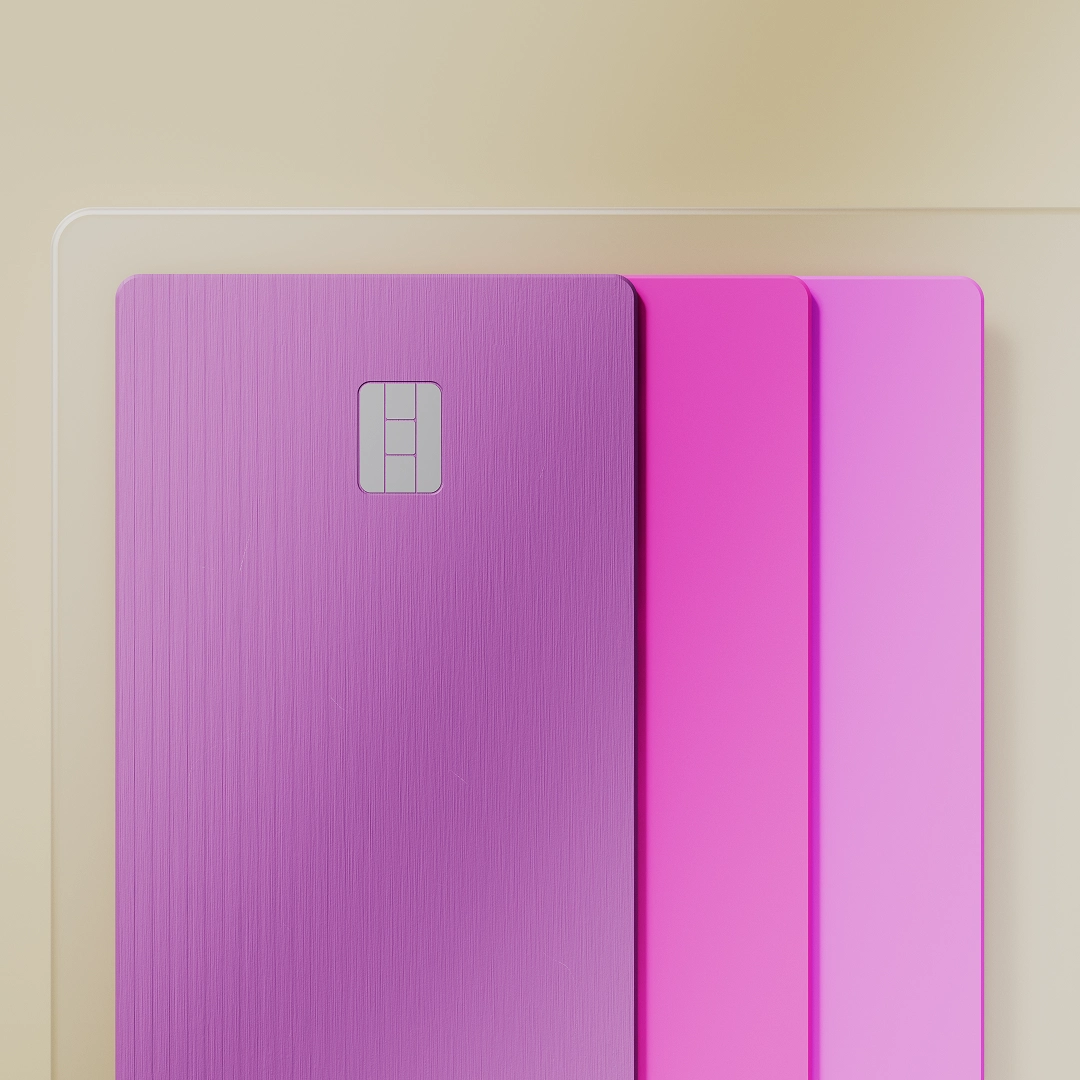
Let’s get physical
In a world obsessed with mobile payments and digital wallets, it might surprise you to learn that 65% of consumer payments in North America still happen with a physical card. Turns out, what’s in your wallet still matters. Physical cards aren’t just holding their ground—they’re winning trust, delivering reliability, and stepping in when phones glitch, batteries die, or Wi-Fi ghosts you at checkout.
So why double down on plastic in a pixel-obsessed world? Because the right card in the right hands can deliver real-world value, drive revenue, and put your brand in motion:
- Your Brand, in Their Hands: A physical card puts your brand in wallets, pockets, and daily routines. Whether it’s swiped at the café or tapped at the airport, every transaction becomes a brand moment.
- Stand Out by Design: In a sea of sameness, a well-designed card (think metal, translucent, or even glow-in-the-dark) becomes a conversation starter and a signal that your brand means business.
- Earn While You Issue: If you charge a fee for physical cards, you open a new revenue stream. Physical cards don’t just enhance the user experience—they boost your bottom line.
- Loyalty You Can Feel: Perks and rewards hit differently when they’re tied to something tangible. Physical cards help deepen emotional loyalty and keep users coming back for more.
- Turn Digital into Real-world Utility: For crypto-backed programs, a physical card bridges the gap between onchain assets and real-world purchases. It makes abstract value feel usable, familiar, and, frankly, exciting.
Options that fit your flow
When done right, physical cards are strategic assets. At Rain, we make it simple to design and launch card programs that shine in the real world. Our full-stack platform gives you end-to-end control, and we even integrate with top-tier card manufacturers, like Arculus® by CompoSecure, to help your card stand out.
These partners bring creativity and craftsmanship to physical cards, offering standout materials such as metal, transparent elements, or even illuminated cards. Premium metal cards, in particular, stand out as a favorite, with 70% of customers saying they’d prefer metal over plastic if all benefits were equal.

Whether you’re sprinting to launch or investing in a fully custom experience, Rain offers three flexible options:
Generic cards: Generic cards are white, unbranded cards that are ready to go, no design or customization needed.
- Timeline: Looking to launch immediately
- Best for: Running a small pilot, issuing fewer than 1,000 cards.
Semi-custom cards: Semi-custom cards allow you to add your logo to the front of the generic white card. Custom shipping carriers can also be set up for an additional branded touch.
- Timeline: ~4 weeks for logo customization; 2–3 weeks for branded carriers (which can be done in-parallel with logo customization).
- Best for: Quick launches with a light brand layer, small-to-medium card quantities.
Custom cards: For companies where physical cards are a key part of the brand experience, fully custom cards provide the highest degree of control and polish. You can customize everything, from front and back design to materials (like metal or glass) and even the shipping experience. Premium metal cards have been shown to create the most impact and often become top of wallet, making them a proven driver of loyalty and usage.
- Timeline: A few weeks for design and up to 2–3 months or longer for manufacturing, depending on complexity.
- Best for: Programs with large-scale volume goals and strong brand integration.
The path to physical
Custom cards offer the highest level of personalization, but they also require a more involved process. Here's a step-by-step look at what you can expect when launching a fully custom physical card with Rain:
- Design (2 weeks): Upload your custom design, get feedback, and lock in materials and quantities with the manufacturer.
- Proofing (2 weeks): Your design is turned into a full spec proof (including artwork, material selections, and card specs) and submitted to you and Visa simultaneously for review.
- Approval (2 weeks): You’ll review everything, request tweaks, and then greenlight production.
- Manufacturing (10+ weeks): The manufactures get to work (note: custom materials like metal or glass may extend timelines further).
- Testing (2 weeks): Cards are sent to the personalization site for functional testing to make sure it’s ready for real-world use.
- Go live (1 week after testing): Your cards ship and your users start flexing your brand.
Physical cards bridge the gap between digital innovation and tangible brand presence. Rain makes it easy to launch, scale, and stand out. If you’re ready to put your card program in motion, we’re ready to help you make it rain—one swipe at a time.

Rizon taps Rain to launch stablecoin-backs cards
Stablecoins have opened the door to programmable money. But using that value in daily life—whether for purchases, payouts, or subscriptions—still requires an invisible layer of infrastructure that can connect digital assets to the real world.
At Rain, we build that infrastructure. And we’re excited to partner with Rizon, a new digital finance platform helping users activate their stablecoin balances across the Visa network.
Through this partnership, Rizon is launching a card product that allows users to access the value of their USDC holdings anywhere Visa is accepted. Behind the scenes, Rain provides the full stack: card issuance, transaction routing, real-time conversion, and onchain settlement.
This is exactly the kind of use case we’re here to enable—giving developers the tools to build consumer-facing products without having to manage banking relationships, compliance complexity, or FX operations.
Here’s what happens when a Rizon user taps their card:
- The transaction is routed through Visa’s network to Rain.
- Rain verifies the cardholder and authorizes the transaction.
- The merchant is paid out by Visa in local fiat.
- Rain handles payments from Rizon Cardholders.
- Rain settles daily onchain with Visa in USDC.
It all happens in the background, in a matter of milliseconds—allowing users to activate their digital dollars globally with no added friction.
Rizon joins a growing set of developers and fintechs using Rain to go to market faster with crypto-enabled financial products. Because we provide everything from BIN sponsorship to transaction monitoring to regulatory localization, Rizon can focus on product and user experience while Rain handles the heavy lifting behind the curtain.
Whether users are transacting online in the U.S. or withdrawing local currency at an ATM in Mexico, the infrastructure adapts to support fast, compliant, real-time flows.
This latest launch is a clear example of how programmable finance moves from concept to reality. When builders have access to compliant, developer-first infrastructure, stablecoins don’t just sit idle in wallets—they become tools for global commerce, payouts, and access.
We're proud to support Rizon in launching a cross-border product that puts stablecoins to work—backed by Rain’s infrastructure and Visa’s global reach.
If you’re building financial products that require seamless utilization, localized card issuance, or programmable payment flows, we’d love to talk.

Rain achieves PCI DSS compliance, reinforcing commitment to secure, compliant stablecoin infrastructure
Certification deepens enterprise-grade trust by building on Rain’s SOC 2 certification and ongoing smart contract audits by Sherlock
Rain, the global card issuing and payments platform powered by stablecoins, today announced that it has achieved compliance with the Payment Card Industry Data Security Standard (PCI DSS). This milestone reinforces Rain's commitment to compliance and security, giving partners confidence that their card programs are built on infrastructure that meets the highest standards.
PCI DSS is a globally recognized standard that mandates rigorous security controls for organizations that handle payment card data. Rain's compliance with this standard ensures that its infrastructure meets the highest levels of security, safeguarding sensitive payment information and reinforcing trust with partners and users alike.
"Achieving PCI DSS compliance is a testament to our dedication to building secure, compliant, and scalable payment solutions," said Christopher Grieco, General Counsel & Chief Compliance Officer at Rain. "This accomplishment complements our SOC 2 certification and the ongoing audits of our smart contracts by Sherlock, highlighting our holistic approach to security and compliance."
Rain is a full-stack, developer-friendly card issuance and payments platform. As a Visa Principal Member, Rain enables programs to launch in weeks—not months—without unnecessary middlemen or fragmented infrastructure. Enterprise institutions, fintechs, and crypto-native platforms rely on Rain’s speed, flexibility, and compliance-first approach to power millions of transactions in over 150 countries annually.
"Our enterprise clients demand the highest standards of security and compliance," said Farooq Malik, CEO & Co-founder of Rain. "With PCI DSS compliance, we're not just meeting those expectations, but exceeding them to ensure our partners can confidently scale their card programs globally.”
Read original press release here: https://www.prnewswire.com/news-releases/rain-achieves-pci-dss-compliance-reinforcing-commitment-to-secure-compliant-stablecoin-infrastructure-302506823.html?tc=eml_cleartime

How Rain makes credit usable every day for Exa App users
What if you could access credit based on your crypto and use it instantly, anywhere Visa is accepted? That’s the powerful combination behind Exa App and Rain. Together, we're enabling users to keep their assets onchain while using borrowed funds for real-world purchases.
Exa App is more than just another crypto wallet. It’s a seamless interface to the Exactly Protocol, a fixed-rate lending protocol that lets users access stablecoin loans using their crypto as collateral. In simple terms: you can lock up your ETH, receive credit in USDC, and use that USDC via a Rain-issued virtual card—all without selling your original assets.
This means Exa users can split big purchases into six or seven fixed-rate installments, all while keeping their crypto positions intact.
When the Exa team set out to bring this vision to life, they needed a card issuer that could meet some serious demands: global Visa coverage, instant USDC-to-dollar swaps, and a developer-friendly API to integrate seamlessly with onchain logic. Rain checked every box.
As a Visa Principal Member and the most experienced issuer of stablecoin-linked card programs, Rain offered Exa the speed, flexibility, and stability it needed to get to market quickly without compromising on compliance or user experience.
Since launching with Rain three months ago, Exa App has seen over $1 million in card transactions and more than $1.5 million in deposits on the Protocol. With around 2,000 users averaging $80 per transaction, the card is already a hit among power users, especially those using it to book travel or pay for big-ticket items in installments.
For example, cardholders are booking Airbnbs or expensive flights from Argentina to Europe on their Rain-issued Visa cards and paying for those in installments thanks to fixed-rate credit provided by the Exactly Protocol.
In addition to the credit offered by the Exactly Protocol, the Exa App is unique for its sophisticated functionality through an intuitive interface. From passkey-based login where your phone’s Face ID is your private key, to nearly instant card approvals, the app is designed to feel like a familiar Web2 fintech product. Yet under the hood, it's all DeFi. As founder Gabriel Gruber explains, "You don’t even know you’re using DeFi, and that’s by design."
It’s the next evolution of decentralized finance: practical, accessible, and built for everyday use. And Rain is proud to power the infrastructure that makes it possible.

Rain and Toku partner to launch real-time stablecoin payroll infrastructure
Integration enables compliant, stablecoin-based payroll and expands the capability for earned wage access and global card spending
Rain, the global card issuing and payments platform built for stablecoins, today announced a partnership with Toku, a leader in compliant token and stablecoin compensation, to launch the first real-time, compliant stablecoin payroll system for global teams.
The integration enables employers to fund and settle payroll instantly in stablecoins—compliantly and at scale—across more than 100 jurisdictions. Rain’s programmable payment rails connect directly to Toku’s employment and tax compliance infrastructure, streamlining payroll operations for modern, distributed workforces.
“Payroll has remained one of the last major financial flows stuck in outdated systems,” said Farooq Malik, CEO and Co-founder of Rain. “By combining Rain’s onchain infrastructure with Toku’s compliance expertise, we’re bringing the benefits of stablecoins to the most important payment of all: your paycheck.”
This integrated solution offers:
- Compliant, cross-border payroll: Toku calculates net pay, manages tax withholding, and ensures labor law compliance in 100+ jurisdictions—supporting payouts in stablecoins like USDG, USDC, and RLUSD, using platforms employers already trust (e.g., ADP, Workday, Gusto).
- Real-time, onchain settlement: Rain’s infrastructure eliminates legacy bottlenecks by routing funds directly to wallets, custodians, or digital asset accounts, which reduces friction, delays, and costs.
- Earned wage access with global utility: Paychecks settle directly to worker-controlled wallets with full transparency and speed, supporting earned wage access and real world usage via Rain-issued cards accepted at over 150 million merchants worldwide.
“Fiat payroll still moves on rails built in the 1970s. Stablecoin payroll has the ability to unleash a fundamental restructuring of corporate cash management,” said Ken O’Friel, CEO and Co-founder of Toku. “We’re excited to be working with Rain and making stablecoin payroll not just possible, but seamless, scalable, and compliant by default.”
This collaboration comes as stablecoins gain regulatory momentum—bolstered by the GENIUS Act—and as more enterprises seek to integrate digital asset infrastructure into their core financial operations. Together, Rain and Toku are delivering the technology, compliance, and reach required to modernize payroll for a global workforce.
Read original press release here: https://www.prnewswire.com/news-releases/rain-and-toku-partner-to-launch-real-time-stablecoin-payroll-infrastructure-302491648.html

From launch to $1M in 1 month — here's how ether.fi did it
When ether.fi tapped Rain to launch Cash, a non-custodial, cash-back credit card program for crypto users, they had the vision of making digital assets easy to use in daily life. Just a few weeks later, that vision became reality, with ether.fi’s program surpassing $1 million in transaction volume. We sat down with ether.fi CEO and founder, Mike Silagadze, to unpack how they achieved such fast traction, and what other partners can learn from their approach.
Note: Interview has been lightly edited for clarity.
For those who may not be familiar, tell us a bit about ether.fi and your broader mission?
Mike Silagadze: ether.fi is building what we call a DeFi bank. So, it is not a traditional bank, but it is a full end-to-end alternative to traditional banking for normal people.
The idea is that you should be able to save your money, be able to deploy that money, invest it in DeFi, and then be able to actually spend that money in real life using our card program.
By offering these services in a way that is non-custodial, in other words, crypto-native, we create a product that really allows people to fully get off of traditional finance and embrace DeFi and all the benefits that it offers.
What was the motivation behind launching a card program?
Mike: We launched a card program because it really is an integral component to giving people an alternative to traditional finance. You could think of it as the last mile of TradFi rails.
A typical crypto user usually starts doing some things within DeFi, hopefully the value goes up and they do well. And then they have to figure out how to off-ramp that money. Maybe they send it to an exchange, sell it for fiat, then transfer it to maybe a custodian, then finally it makes its way to their traditional bank account. Then maybe they can use a card or however they want to spend that money.
It's a process that is cumbersome. It takes a day, multiple days sometimes. It can cost tens or hundreds of dollars depending on a bunch of different factors.
So having a direct, easily integrated card right into your DeFi account—your non-custodial account—lets you actually use your crypto day-to-day in real life.
Why did you choose Rain as your card program partner?
Mike: We chose Rain to power our card program for number of different factors:
1. Ability to launch & scale quickly: Rain was super responsive and willing to work fast—at the pace of our startup. Without naming any other folks that we looked at, the timelines that we got were somewhere on the order of three to six months to get a new card program up and running. Whereas with Rain, we were able to get up and running in a matter of weeks. That was incredibly important.
2. Proactive customer support: The Rain team was accessible. We were able to talk to everybody all the way up to the founders. It was great to have that level of customer care and communication.
3. Flexible, modern API infrastructure: Rain’s API and actual product was great. And the deal terms were really favorable.
4. Stablecoin-powered solution: Finally, it's worth mentioning that being able to settle in stablecoins was huge for us. This program is specifically designed for users that have assets onchain, and so not having to deal with the fiat off-ramp in order to be able to settle the accounts was really valuable.
What did you do to make the launch so successful?
Mike: There were a number of things that we had to do in order to have a successful launch and just get the card out there:
1. Use earned media to get the word out: As a starting point ether.fi had an unfair advantage because we have previously launched a number of other products. We had our staking product, and then we had our liquid product with the DeFi strategy vaults. And those products all had hundreds of thousands of customers and pretty well-regarded brands in the crypto and DeFi space. So, that just gave us a leg up. As a result, we were actually able to get a ton of earned media. We got coverage in pretty much every major crypto media publication with respect to the launch. And we got on a number of really solid podcasts.
2. Tap into influential investors and advisors: We also had a couple of our investors, including folks like Arthur Hayes, talk about the card that we launched. So, a lot of our strategy focused on this kind of organic go-to-market, which ended up being very successful.
3. Offer sign-up incentives: Shortly after the initial release, we launched an incentive program where we allocated some number of ETHFI—our governance token—to incentivize getting people signed up early.
4. Encourage spend with perks and rewards: Very shortly, we're going to be rolling out an integration that was just announced around travel bookings. So you'll be able to—as part of the ether.fi DeFi Bank offering—log in, book your hotel and eventually flights, get 5% cashback on all of it, in addition to getting prices that are just wildly good. It's almost hard to believe it. Then today actually, we're rolling out a referral program for our users where you'll be able to refer a friend and get cashback on all of their spending.

Rain powers the Spritz Card—using stablecoins to make onchain assets usable everyday
As stablecoins approach a $250 billion market cap, their role in everyday financial activity is becoming more significant. Spritz saw an opportunity to make their members’ digital assets more usable in daily life by creating a card experience that meets the expectations of crypto-native users—instantly accessible, flexible, and easy to use. To bring this vision to life, they needed secure, compliant, and scalable infrastructure that could support global transactions, wallet connectivity, and seamless real-time access to crypto balances.
The solution
Spritz partnered with Rain to launch the Spritz Card, a Visa Signature card that brings a frictionless crypto-usage experience directly to users' wallets. Leveraging Rain’s robust and security-first payment infrastructure, the Spritz Card enables users to fund their virtual cards instantly, with no staking, lockups, or delays.
Key features include:
- Instant Wallet-to-Card Funding: Users can instantly collateralize their Spritz Card from thousands of supported crypto assets, directly from their personal wallets.
- Global Spending with Visa Signature: The Spritz Card can be used globally at any merchant accepting Visa, available online, in-store via Apple Pay and Google Pay, and soon at ATMs.
- Multi-chain Compatibility: Rain’s infrastructure powers transactions seamlessly across multiple blockchains.
- Security-First Design: Integrated 3D Secure protection ensures safe transactions, backed by Rain’s compliance and security protocols.
- Visa Signature Benefits: Users enjoy premium benefits like lounge access, concierge services, extended warranties, and more.
The results
The collaboration between Spritz and Rain sets a new standard for crypto-native card products, blending crypto and traditional finance with ease:
- Frictionless User Experience: Users enjoy immediate access to their crypto funds for real-world usage, eliminating traditional pain points like staking requirements, locked funds, and delays.
- Mainstream Crypto Usability: The Spritz Card demonstrates real-world utility for stablecoins and other crypto assets, enabling everyday transactions and subscriptions with familiar payment methods.
- Positioned for Mass Adoption: By leveraging Rain’s scalable and secure infrastructure, Spritz is positioned for rapid growth, seamlessly handling increased user adoption and transaction volumes.
- Enhanced Consumer Trust: Spritz offers a truly crypto-native usage solution without sacrificing security or convenience, enhancing trust among crypto consumers and mainstream adopters alike.
“Partnering with Rain enabled us to rethink the crypto card experience, eliminating friction and prioritizing instant access and usability. Together, we've created a product that meets the needs of crypto users and truly brings stablecoins into everyday life.” – Chris Sheehan, CEO of Spritz
Conclusion
Powered by Rain’s compliant, secure, and scalable spend infrastructure, Spritz has successfully launched a next-generation crypto card solution that delivers true liquidity, convenience, and global usability for crypto-native consumers. This partnership marks a leap forward in mainstream crypto adoption, demonstrating the practical, everyday value of stablecoins and multi-chain crypto spending.

Rain expands support to Solana and Stellar, enabling more partners to launch stablecoin-powered card programs
New integrations expand Rain’s multi-chain support, enabling partners to easily launch stablecoin-powered card programs across even more blockchains simultaneously
Rain, the global card issuing platform powered by stablecoins, today announced native support for Solana and Stellar, expanding its mission to build modern financial infrastructure that is more accessible, programmable, and global. With these integrations, Rain enables partners built on top of Solana’s high-throughput infrastructure, and Stellar’s remittance-oriented network to quickly launch compliant card programs and bring stablecoin utility to real-world payments, including consumer and B2B spending, cross-border disbursements, and platform payouts.
Rain is the only Visa Principal Member that allows partners to deploy and manage programs across multiple blockchains simultaneously. This capability is available out of the box, supporting both custodial and non-custodial wallets. It dramatically simplifies how exchanges, fintechs, neobanks, and platforms issue cards that work globally—instantly enabling stablecoins to be used at over 150 million merchants that accept Visa.
“Quickly developing solutions that meet our partners’ needs is all part of Rain’s commitment to building financial infrastructure that is more global, open, and efficient,” said Charles Yoo-Naut, CTO and Co-founder of Rain. “By offering native support for Solana and Stellar, we’re introducing our solution to even more ecosystems, allowing partners to build scalable, stablecoin-powered card programs that make payments better for everyone.”
One example is KAST, a neobank app built on Solana that works with Rain to offer branded cards that let users spend stablecoins natively from their wallets. With its fast, low-cost architecture, Solana allows KAST to build seamless, real-time payment experiences for its growing user base across global markets.
These new integrations come in response to rising demand from platforms seeking to enable seamless stablecoin-linked spending and expand card access across ecosystems. Rain already supports Arbitrum, Optimism, and Polygon, and this expansion reinforces Rain’s leadership in offering multi-chain, stablecoin-native card infrastructure.
Rain recently raised a $24.5 million Series A round in March. Today’s announcement marks another step in Rain’s rapid growth and commitment to deploying capital to support new partners, scale its global footprint, and meet the accelerating demand for programmable payments worldwide.
Read original press release here: https://www.prnewswire.com/news-releases/rain-expands-support-to-solana-tron-and-stellar-enabling-more-partners-to-launch-stablecoin-powered-card-programs-302467576.html

Rain and Visa partner to accelerate onchain credit cards
Today, Rain announced it has joined Visa’s pilot program for stablecoin settlement. Rain has fully tokenized its credit card receivables and has transitioned all settlement transactions for its Visa cards to USDC, to now be able to settle with Visa 7 days a week, 365 days a year.
Rain provides backend infrastructure – APIs, compliance layers and settlement logic – that enables fintechs and wallets to build and launch stablecoin-linked card programs. As demand for real time, global payments grow, Rain is seeing strong momentum from partners looking to issue and use onchain cards and settle in stablecoins.
7 day stablecoin settlement
Rain’s proprietary settlement stack brings all authorization logic and settlement onchain. Rain’s technology stack allows for card transactions on the Visa network to be interoperable with stablecoins across multiple blockchains. When a user makes a payment with a Rain-issued Visa card, Visa settles with the merchant acquirer as usual. Rain is programmatically leveraging stablecoins enabling network settlement 7 days a week, 365 days a year.
Tokenized credit card receivables
Rain’s platform has also fully tokenized its credit card receivables, enabling more efficient capital management and transparency across the system. These capabilities help fintechs go to market faster with new products. While giving consumers access to digital-first globally interoperable payment experiences.
Rain is also proud to announce a world first: closed loop credit card receivable financing utilizing stablecoins. Rain works with a network of capital partners - borrowing stablecoins to facilitate network settlement for credit card receivables. By borrowing from and programmatically repaying lenders Rain has been able to reduce the total cost of capital for consumer and b2b credit programs while providing lenders access to superior collateral and programmatic repayments powered by smart contracts. This powerful construct has the potential to unlock credit access for users in underdeveloped financial markets, all while unlocking significant operational and capital efficiencies for Rain and Rain powered programs.
"By participating in Visa’s USDC settlement program, we are now able to conduct settlement 7 days a week, 365 days a year, operating outside of traditional banking hours. USDC settlement allows us to be more capital efficient – helping to reduce the need for collateral while providing our counterparties the same level of protection. This sets a new standard for issuers and further enhances digital asset utility," said Farooq Malik, CEO & Co-founder of Rain.
"Moving money across borders has always been complex, but blockchain technology and stablecoins are helping change that,” said Rubail Birwadker, Head of Growth Products and Partnerships, Visa. “Our work with Rain to help bring payments onchain and enable seven-day settlement is a big step toward helping to simplify global payments.”
This is just the beginning. Rain continues to explore new ways to enhance the utility of stablecoins, such as its asset-agnostic settlement stack and blockchain permissioning, which together enable credit to exist entirely onchain. Rain is paving the way for a more efficient, transparent, and accessible financial ecosystem that reduces working capital, reduces fraud, and drives improvements in operational outcomes.
Visa Principal Membership
A Visa principal member, Rain enables seamless payment solutions at more than 150 million Visa-accepting merchant locations worldwide. By utilizing stablecoins for automated daily settlement with the Visa network, Rain is doubling down on its mission to integrate blockchain technology with traditional financial systems, making digital assets seamlessly interoperable for everyday use cases.